
A Complete Guide to Switching to Energy-Efficient LED Lighting

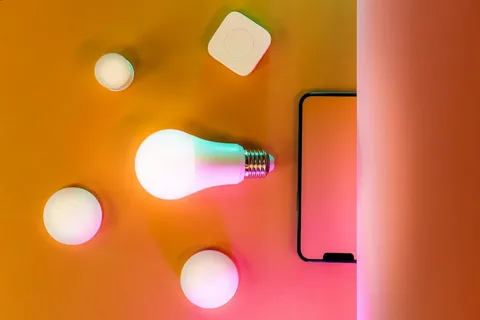
The world of lighting has changed dramatically in recent years, and LED Lighting Adoption sits at the heart of that transformation. From residential living rooms to massive industrial warehouses and smart city streetscapes, LED technology is quietly replacing older, inefficient lighting systems at a pace that would have seemed impossible just two decades ago.
What is driving this shift? The answer lies in a compelling mix of economic savings, environmental responsibility, rapid technological progress, and supportive government policy. This guide takes a deep dive into all of these factors, helping readers understand not just the “what” of LED Lighting Adoption, but the “why” and “how” that make it one of the most significant energy revolutions of the modern era.
What Is LED Lighting Adoption?
LED, short for Light Emitting Diode, refers to a semiconductor-based lighting technology that produces light far more efficiently than incandescent, halogen, or fluorescent alternatives. LED Lighting Adoption describes the growing global trend of replacing these older light sources with LED fixtures across residential, commercial, industrial, and municipal settings.
Unlike traditional bulbs that generate light by heating a filament or exciting a gas, LEDs convert electrical energy directly into light through a process called electroluminescence. This fundamental difference in technology is what makes LEDs so extraordinarily efficient and explains why LED adoption rates have climbed so sharply in recent years.
A Brief History of LED Technology
The first practical LED was developed in the early 1960s by Nick Holonyak Jr. at General Electric. For decades, LEDs were limited to simple indicator lights on electronics. It was not until the invention of the high-brightness blue LED in the 1990s, a breakthrough that earned its inventors the 2014 Nobel Prize in Physics, that white LED lighting for general use became commercially viable.
Since the mid-2000s, the cost of LED technology has fallen by over 90%, and luminous efficacy (a measure of how efficiently a light source produces visible light) has improved dramatically. These twin forces, falling costs and rising performance, set the stage for the rapid LED Lighting Adoption the world is experiencing today.
Key Drivers of LED Lighting Adoption
Energy Efficiency and Cost Savings
Perhaps the single most compelling driver of LED Lighting Adoption is energy efficiency. LED bulbs use approximately 75 to 80% less energy than incandescent bulbs and around 30 to 50% less than compact fluorescent lamps (CFLs). For households, this translates into meaningful reductions in electricity bills. For large commercial facilities or industrial operations with thousands of lighting fixtures running around the clock, the savings can run into hundreds of thousands of dollars annually.
The lifespan of LED lighting further amplifies these savings. A quality LED bulb can last anywhere from 25,000 to 50,000 hours or more, compared to roughly 1,000 hours for a standard incandescent bulb. This dramatically reduces maintenance costs and the frequency of bulb replacements, a factor that carries particularly significant weight for businesses and municipalities managing large lighting infrastructures.
Environmental Benefits and Sustainability Goals
As climate change becomes an increasingly urgent concern, LED Lighting Adoption has emerged as a practical, scalable tool for reducing carbon footprints. Because LEDs consume far less electricity, they indirectly reduce greenhouse gas emissions from power plants, the majority of which still rely on fossil fuels. According to the U.S. Department of Energy, widespread LED adoption in the United States alone could reduce the country’s electricity demands for lighting by nearly 50% by 2035.
Unlike fluorescent lamps, LEDs contain no mercury or other hazardous materials, making them safer to dispose of and less harmful to the environment at end-of-life. This cleaner material profile aligns well with circular economy principles and the growing emphasis on responsible product stewardship across industries.
Government Regulations and Policy Incentives
Government intervention has played a pivotal role in accelerating LED Lighting Adoption worldwide. Many countries have introduced legislation to phase out energy-inefficient lighting products. The European Union completed the phase-out of most incandescent and halogen lamps by 2023. The United States, Canada, Australia, and numerous other nations have implemented similar measures.
Beyond regulation, financial incentives have also proved powerful. Utility rebate programmes, tax credits, and energy efficiency grants reduce the upfront cost of switching to LED, making the transition more accessible for low-income households and small businesses. These policy levers have been instrumental in removing financial barriers that might otherwise slow adoption.
Technological Innovation and Smart Lighting
Advances in LED technology continue to push the boundaries of what is possible. Modern LEDs are no longer just energy-efficient alternatives to older bulbs; they are increasingly intelligent, connected devices. The integration of LEDs with smart lighting controls, sensors, and Internet of Things (IoT) platforms has given rise to sophisticated lighting management systems capable of automating and optimising lighting based on occupancy, natural daylight levels, and time of day.
Smart LED systems allow commercial building operators to reduce energy waste significantly, improve occupant comfort, and gather detailed data on energy usage patterns. In smart cities, LED streetlights integrated with sensors and wireless networks are helping municipalities manage public lighting more efficiently, reduce operational costs, and even contribute to public safety initiatives.
LED Lighting Adoption Across Sectors
Residential Lighting
At the household level, LED Lighting Adoption has become mainstream in many parts of the world. Consumers replacing old bulbs are naturally gravitating toward LEDs because they are widely available, competitively priced, and offer an immediately tangible reduction in electricity bills. The range of LED products available today, from warm-toned ambient bulbs to colour-changing smart lights controllable via smartphone apps, has made the technology appealing to a broad spectrum of consumers.
Retrofit LED bulbs designed to fit standard fixtures have made the transition simple and cost-effective, requiring no changes to existing wiring or infrastructure. This ease of adoption has been a key factor in the rapid uptake of LED lighting in homes globally.
Commercial and Retail Lighting
The commercial sector has been a major frontier for LED Lighting Adoption. Office buildings, retail stores, hotels, hospitals, and educational institutions all stand to benefit enormously from LED technology. The combination of high-quality lighting, reduced energy consumption, lower maintenance requirements, and enhanced controllability makes LEDs an especially attractive proposition for facility managers focused on operational efficiency.
In retail environments specifically, LED lighting’s superior colour rendering ability, its capacity to make products look vivid and appealing under artificial light, has made it the technology of choice for shop floors, display areas, and window displays. High-end retailers have embraced LEDs not only for the energy savings but for the enhanced visual environment they create.
Industrial and Warehouse Lighting
Industrial facilities and large warehouses present some of the most compelling use cases for LED Lighting Adoption. These environments typically operate long hours, feature very high ceiling heights, and rely on powerful lighting systems that traditionally consume enormous amounts of energy. Switching to high-bay LED fixtures in such environments can deliver energy savings of 60 to 70% compared to older metal halide or fluorescent high-bay systems.
Beyond energy savings, LEDs offer superior durability and resistance to vibration, shock, and extreme temperatures, characteristics that are especially valuable in demanding industrial environments. The instant-on capability of LEDs, without any warm-up period, is another practical advantage in facilities where lighting needs to function reliably at all times.
Municipal and Street Lighting
Municipalities around the world have been investing heavily in LED Lighting Adoption for public street and area lighting. Traditional street lighting systems based on high-pressure sodium lamps are being systematically replaced with LED alternatives in cities across North America, Europe, Asia, and beyond.
The energy savings from municipal LED upgrades are substantial. Cities that have completed large-scale LED streetlight conversions routinely report reductions in street lighting energy consumption of 50 to 60% or more. These savings translate directly into lower municipal operating budgets, freeing public funds for other services. Los Angeles, for example, became one of the first major cities globally to complete a citywide LED streetlight conversion, saving tens of millions of dollars in energy and maintenance costs annually.
Barriers to LED Lighting Adoption
Upfront Cost Concerns
Despite significant price reductions in recent years, the upfront cost of LED fixtures and bulbs can still present a barrier, particularly for consumers in developing markets or households with tight budgets. Although the total cost of ownership over the life of an LED product is almost always lower than that of conventional alternatives, many people focus on the immediate purchase price rather than long-term savings, a behavioural pattern that can slow adoption.
Knowledge and Awareness Gaps
A lack of consumer awareness and understanding about LED technology remains a meaningful challenge in some markets. Confusion about colour temperature, lumens, compatibility with existing fixtures, and dimmer switches can make the purchasing decision feel unnecessarily complex. Effective public education campaigns and clear product labelling play an important role in helping consumers make informed choices.
Compatibility and Infrastructure Challenges
In some older buildings and facilities, existing electrical infrastructure may not be fully compatible with LED technology without additional modifications. Dimmer switches designed for incandescent lamps, for example, may cause flickering or buzzing when used with LED bulbs. Addressing compatibility issues can add to the complexity and cost of LED upgrades in certain settings.
Quality Variability in the Market
The rapid growth of the LED market has attracted a flood of products of widely varying quality. Low-quality LEDs from unreliable manufacturers may fail prematurely, produce inconsistent light output, or fail to deliver the energy savings claimed on the packaging. Helping consumers identify and purchase quality-verified products through certification schemes such as ENERGY STAR in the United States or equivalent programmes elsewhere is essential to maintaining consumer trust in LED technology.
The Future of LED Lighting Adoption
Human-Centric Lighting
One of the most exciting frontiers in LED technology is human-centric lighting (HCL), the design of lighting systems that mimic the natural variation of daylight to support human health, wellbeing, and productivity. Research has demonstrated that the colour temperature and intensity of light affect human circadian rhythms, mood, and cognitive performance. Advanced LED systems capable of dynamically adjusting their output throughout the day are beginning to appear in offices, schools, hospitals, and senior care facilities, with promising early results.
Integration with Renewable Energy
As the world’s electricity grids shift toward greater proportions of renewable energy from solar and wind sources, the synergy between LED Lighting Adoption and clean energy becomes increasingly powerful. The low energy demand of LED systems makes them highly compatible with on-site solar power generation, enabling buildings and communities to further reduce or even eliminate their dependence on grid electricity for lighting.
Li-Fi Technology
Looking further ahead, LED technology may play a transformative role in wireless data communication through a technology known as Li-Fi (Light Fidelity). Li-Fi uses rapid, imperceptible modulations in LED light output to transmit data at very high speeds. While still largely in research and early deployment phases, Li-Fi represents a fascinating potential application that could see LED lighting infrastructure serve double duty as wireless internet delivery systems.
Continued Cost Reduction and Democratisation
The cost of LED technology continues to decline, driven by ongoing advances in manufacturing efficiency and growing global production volumes. As prices fall further, LED Lighting Adoption will become increasingly accessible to households and communities in lower-income countries that have so far been left behind by the LED revolution. This democratisation of efficient lighting has the potential to deliver significant quality-of-life improvements and energy cost reductions to hundreds of millions of people worldwide.
Conclusion
LED Lighting Adoption represents far more than a simple switch from one type of bulb to another. It is a fundamental technological shift with profound implications for energy consumption, environmental sustainability, economic efficiency, and even human health and wellbeing. The evidence is clear: LEDs outperform traditional lighting technologies on virtually every meaningful metric.
Governments, businesses, and individuals all have important roles to play in accelerating this transition. Whether through supportive policy, informed purchasing decisions, or investment in smart lighting infrastructure, each step toward broader LED Lighting Adoption brings the world closer to a more energy-efficient, sustainable, and cost-effective future.
For those who have yet to make the switch, the question is no longer whether LEDs are worth it. The question is simply: what is the reason to wait any longer?