
A Simple Guide to Switching to Energy-Efficient LED Lighting

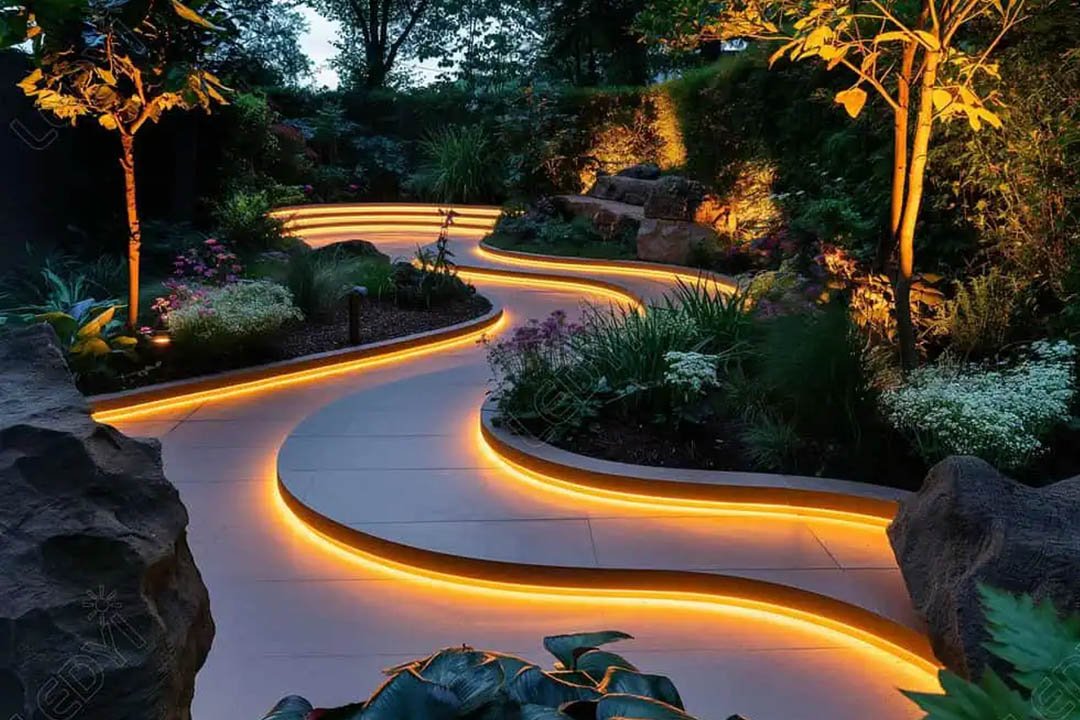
The LED Lighting Revolution is not a distant promise; it is happening right now, in living rooms, warehouses, hospitals, city streets, and even underwater research stations across the globe. What started as a laboratory curiosity has grown into one of the most sweeping technological transformations the world has ever witnessed. In just a few decades, light-emitting diode technology has dismantled more than a century of lighting tradition, replacing hot, fragile, energy-hungry bulbs with cool, durable, and extraordinarily efficient alternatives that are changing the economics of energy worldwide.
This article takes a deep dive into every dimension of the LED lighting revolution, its origins, its science, its economic and environmental impact, its smartest innovations, and the remarkable future still unfolding. Whether someone is a homeowner looking to cut electricity bills, a business owner weighing a lighting retrofit, or simply a curious reader wanting to understand one of the most consequential technology shifts of the modern era, this guide covers it all.
What Is the LED Lighting Revolution?
At its core, an LED or Light Emitting Diode is a semiconductor device that produces light when an electric current passes through it. Unlike incandescent bulbs, which generate light by heating a wire filament until it glows, or fluorescent tubes, which excite mercury vapor to emit ultraviolet radiation that a phosphor coating then converts to visible light, LEDs produce photons directly and efficiently through a process called electroluminescence.
The LED lighting revolution refers to the global, industry-wide transition from older lighting technologies to LED-based systems across residential, commercial, industrial, agricultural, automotive, and public infrastructure sectors. It is not merely a product upgrade; it represents a complete rethinking of what light should cost to produce, how it should be controlled, how long it should last, and what environmental impact it should carry.
The revolution is being driven simultaneously by technological improvement, falling manufacturing costs, tightening environmental regulations, growing consumer awareness, and the rise of the “smart” connected home and building. All of these forces are converging to make LED the unquestioned dominant lighting technology of the 21st century.
A Brief History: How the LED Lighting Revolution Began
The First Glimmer: Early LED Discoveries
The story of the LED does not begin in a Silicon Valley startup; it begins in the early 20th century with a series of quiet scientific observations. In 1907, British scientist H.J. Round observed that silicon carbide crystals emitted a faint yellowish light when an electric current was applied. It was a curiosity without practical application at the time, and the observation went largely unnoticed.
Decades later, in 1927, Soviet inventor Oleg Losev published research describing light emission from zinc oxide and silicon carbide diodes. His work was foundational, but again, the technology of the era lacked the tools to capitalize on it. The world was still in the age of the incandescent bulb, a technology that Thomas Edison had commercialized in 1879, and that had remained largely unchanged ever since.
The First Practical LED 1962
The modern LED story truly begins in 1962, when engineer Nick Holonyak Jr., working at General Electric, developed the first practical visible-spectrum LED, one that emitted red light. Holonyak is widely regarded as the “father of the LED,” and his invention was immediately recognized as significant. However, early LEDs produced only red light at low intensity, limiting their use to indicator lights, calculator displays, and electronic signage.
Throughout the 1970s and 1980s, engineers expanded the LED color palette. Green and yellow LEDs became commercially available, and gradual improvements in brightness made them more useful. Still, the critical piece was missing: white light. Without the ability to produce white light efficiently, LEDs could never replace general-purpose illumination.
The Nobel Prize Breakthrough: The Blue LED
The missing piece arrived in the 1990s, in the form of the blue LED. Japanese researchers Isamu Akasaki, Hiroshi Amano, and Shuji Nakamura spent years working with gallium nitride, a material that others had dismissed as too difficult to work with, and succeeded in creating the first high-brightness blue LED. This achievement was so transformative that it earned all three men the Nobel Prize in Physics in 2014.
Why was the blue LED so important? Because by combining a blue LED with a yellow phosphor coating, engineers could produce white light, the kind needed for everyday illumination. This single discovery unlocked the entire potential of LED technology for general lighting and set the LED lighting revolution in motion.
From Lab to Living Room: Commercial Adoption
Through the 2000s, LED lighting began making inroads in niche applications, such as traffic lights, exit signs, architectural accent lighting, and backlighting for LCD screens. Each application helped drive down manufacturing costs and push engineers to develop brighter, more efficient devices.
By the late 2000s and early 2010s, LED bulbs designed as direct replacements for incandescent bulbs began appearing in hardware stores. Early prices were high; a single LED bulb might cost $30 or more, but prices dropped rapidly as manufacturing scaled. By the mid-2010s, LED bulbs were price-competitive with traditional alternatives on a lifetime cost basis, and governments around the world began phasing out incandescent bulbs through regulation. The LED lighting revolution had officially gone mainstream.
The Science Behind LED Efficiency
Understanding why LEDs are so much better than what came before requires a brief look at the physics of light production. An incandescent bulb works by passing electricity through a thin tungsten filament, heating it to around 2,700°C until it glows. This process is extraordinarily inefficient; roughly 90 to 95% of the energy consumed is radiated as heat, not light. Only 5 to 10% of input energy becomes visible light.
A compact fluorescent lamp (CFL) is more efficient than an incandescent it converts about 20 to 25% of energy into visible light, but it relies on mercury vapor, requires a warm-up period, and contains hazardous materials that complicate disposal.
An LED, by contrast, converts roughly 40 to 50% of input energy into visible light under real-world conditions, with the best laboratory LEDs achieving efficiencies above 80%. Heat is still produced, but it is conducted away from the light-emitting junction rather than radiated into the room. This not only saves energy but also reduces the cooling load on air conditioning systems in buildings, an additional, often overlooked efficiency benefit.
The efficiency of LEDs is measured in lumens per watt (lm/W). A traditional 60-watt incandescent bulb produces about 800 lumens, roughly 13 lm/W. A comparable LED bulb produces the same 800 lumens using only 8 to 10 watts, achieving 80 to 100 lm/W. High-performance commercial LEDs are now exceeding 200 lm/W in laboratory settings, and the theoretical ceiling is even higher.
The Environmental Case for the LED Lighting Revolution
Reducing Carbon Emissions at Scale
Lighting accounts for approximately 15% of global electricity consumption, according to the International Energy Agency. Given that much of the world’s electricity is still generated from fossil fuels, the energy savings delivered by LED adoption translate directly into massive reductions in carbon dioxide emissions.
The U.S. Department of Energy has estimated that widespread LED adoption across the United States alone could save the energy equivalent of the output of 44 large power plants annually by 2027. Globally, the IEA estimates that if all lighting were converted to efficient LED technology, the reduction in global electricity demand would eliminate the need for hundreds of power stations and cut CO₂ emissions by over 1.4 billion tonnes per year.
These are not marginal improvements; they represent transformative progress toward global climate goals.
Eliminating Mercury from Lighting
Compact fluorescent lamps contain small amounts of mercury, a potent neurotoxin that poses environmental risks when CFLs are improperly disposed of in landfills. For years, the efficiency advantages of CFLs were tempered by the complications of their mercury content. LEDs contain no mercury whatsoever, making them far safer to manufacture, use, and dispose of. This is particularly significant in regions where proper hazardous waste disposal infrastructure is limited.
Reducing Waste Through Longevity
A standard incandescent bulb lasts around 1,000 hours. A CFL lasts 8,000 to 10,000 hours. A quality LED bulb, by contrast, is rated for 25,000 to 50,000 hours, and some industrial-grade LEDs are designed for even longer service lives. When a bulb lasts 25 times longer than the one it replaces, the waste reduction is profound. Fewer manufacturing cycles, fewer raw materials consumed, and fewer spent bulbs in landfills all contribute to a meaningfully smaller environmental footprint.
The Economic Impact of Switching to LED Lighting
Household Savings
For a typical household, lighting can represent 10 to 15% of the total electricity bill. Switching entirely from incandescent bulbs to LED equivalents can cut that portion by 70 to 80%, resulting in meaningful annual savings. When LED bulb costs are factored in alongside those savings, most households achieve full payback within one to two years and then continue enjoying savings for the remaining lifespan of the bulbs, which may be a decade or more.
Consider this practical illustration: replacing a single 60-watt incandescent bulb that is used for 8 hours per day with a 9-watt LED equivalent saves roughly 148 kilowatt-hours per year. At an average U.S. electricity rate of $0.16/kWh, that single bulb saves approximately $23 per year. Multiply that across all the bulbs in a home, and the numbers become significant very quickly.
Commercial and Industrial Retrofits
For businesses and industrial facilities, the economics of LED retrofits are even more compelling. Commercial lighting systems often run for 12 to 16 hours per day, and the fixtures tend to be larger and more power-hungry than residential equivalents. Replacing metal halide, high-pressure sodium, or fluorescent lighting with LED alternatives can cut energy consumption by 40 to 70%.
Large retailers like Walmart, Target, and IKEA have completed massive LED retrofit programs, reporting dramatic reductions in electricity costs and maintenance expenses. Warehouses where high-bay lighting runs continuously often achieve payback periods of two to three years on LED retrofits, with energy savings that continue for decades.
Municipal and Infrastructure Savings
Perhaps nowhere has the economic impact of the LED lighting revolution been more visible than in municipal streetlighting. Cities from Los Angeles to London to Singapore have converted their streetlight networks to LED, with results that consistently exceed expectations. Los Angeles replaced 140,000 streetlights with LEDs and reported energy savings of 63%, a reduction that translates to millions of dollars in annual savings. Maintenance costs also fell sharply, since LED streetlights need replacement far less frequently than the sodium vapor lights they replaced.
Cities around the world are reinvesting those savings into other public services, infrastructure improvements, and additional sustainability initiatives, creating a virtuous economic cycle driven by LED efficiency.
Return on Investment and Payback Periods
For most applications, LED retrofits represent one of the best return-on-investment propositions in the world of energy efficiency. While the specific figures vary by application, energy rates, and usage patterns, payback periods of one to four years are common, followed by decades of ongoing savings. Very few capital investments in any sector deliver this kind of reliable, long-term financial return.
Smart LED Lighting: The Intelligent Next Chapter
The LED lighting revolution is not just about replacing old bulbs with more efficient ones. It is also about making lighting smarter, more responsive, and more deeply integrated into the fabric of modern buildings and cities.
What Is Smart LED Lighting?
Smart LED lighting systems go beyond simple on/off switching. They incorporate wireless connectivity, sensors, programmable controls, and integration with other building systems to create lighting environments that are responsive, adaptive, and highly efficient.
In a smart LED system, lights can automatically dim when natural daylight is sufficient, turn off when a space is unoccupied, adjust color temperature based on the time of day, and respond to voice commands or smartphone control. They can be scheduled, monitored remotely, and analyzed for energy usage patterns, giving building managers unprecedented visibility and control.
LED Lighting and the Internet of Things
Smart LEDs are increasingly becoming nodes in the broader Internet of Things (IoT) ecosystem. In smart buildings, LED luminaires equipped with sensors can do far more than illuminate a space; they can monitor temperature, detect occupancy, track indoor air quality, support asset tracking, and communicate with HVAC and security systems to optimize the overall building environment.
This level of integration represents a fundamental shift in how buildings are managed. Lighting infrastructure, traditionally a passive, set-and-forget system, is becoming an active participant in building intelligence. The data generated by smart LED systems can help facility managers make better decisions about space utilization, energy procurement, and maintenance scheduling.
Human-Centric Lighting
One of the most exciting frontiers in smart LED technology is human-centric lighting (HCL), the design of lighting systems that are aligned with the natural rhythms of the human body. Research in chronobiology has established that the color and intensity of light have a profound effect on the circadian rhythm, mood, alertness, and sleep quality.
LEDs, with their ability to be tuned across a wide range of color temperatures and intensities, are perfectly suited to implement human-centric lighting principles. In the morning, a smart LED system might produce bright, cool light (5000 to 6500K) to stimulate alertness. In the evening, it might gradually shift to warm, dim light (2700 to 3000K) to support the body’s natural wind-down process.
In hospitals, human-centric LED lighting is being used in patient rooms to support recovery and improve sleep. In schools, it is being used to improve concentration and reduce eye strain among students. In office buildings, it is being implemented to reduce afternoon energy slumps and improve employee well-being and productivity. The research in this area is still growing, but the early results are compelling.
Wireless Lighting Control Protocols
Smart LED systems rely on a variety of wireless communication protocols, including Zigbee, Z-Wave, Bluetooth Mesh, Wi-Fi, and DALI (Digital Addressable Lighting Interface). Each has different characteristics in terms of range, power consumption, and compatibility with other smart home and building platforms. As these protocols mature and standards consolidate, smart LED systems are becoming easier to install, configure, and manage.
LED Lighting Across Industries: A Sector-by-Sector Look
Residential Lighting
The home has been the most visible battleground of the LED lighting revolution. Consumers have embraced LED bulbs, LED strip lights, LED downlights, LED smart bulbs, and LED fixtures in every room. Smart bulb ecosystems from companies like Philips Hue, LIFX, and Nanoleaf have made sophisticated, app-controlled LED lighting accessible to everyday consumers without requiring professional installation.
Beyond simple replacement bulbs, residential LED innovation includes color-changing mood lighting, sync-with-media systems that pulse and shift colors in time with movies and music, integrated LED fixtures designed for specific architectural applications, and outdoor LED lighting systems that dramatically improve home security and curb appeal.
Commercial Retail Spaces
Lighting is a critical tool in retail. The right light makes merchandise look more appealing, guides customer flow, creates atmosphere, and influences purchasing behavior. LED technology has given retailers unprecedented control over all of these variables.
High-CRI LEDs (Color Rendering Index of 90+) render colors faithfully and vividly, making clothing, food, cosmetics, and jewelry look their best. Tunable white LEDs allow retailers to shift the mood of a space depending on the time of day or type of promotion. Directional LED spotlights provide precise accent lighting without the heat generated by halogen alternatives, which can damage temperature-sensitive merchandise.
Healthcare and Hospitals
Hospitals have unique and demanding lighting requirements. Clinical areas need high levels of bright, accurate light to support diagnosis and surgical procedures. Patient rooms need flexible systems that can provide functional light for nursing staff while also creating a calm, restful environment for patients. Corridors need reliable overnight lighting that supports staff movement without disturbing sleeping patients.
LEDs excel in all of these applications. High-CRI surgical LEDs provide exceptionally accurate color rendering to support precision work. Tunable white systems in patient rooms can support circadian health and reduce the disorientation that many hospitalized patients experience. Long-life LEDs reduce maintenance demands in hard-to-access ceiling fixtures. And the absence of mercury makes LEDs far safer in a clinical environment than fluorescent alternatives.
Education
Schools and universities are turning to LED lighting as part of broader sustainability and wellbeing initiatives. Studies have shown that proper lighting in classrooms, bright enough to support reading and writing, but not harsh or glare-producing can improve student attention and learning outcomes. LED systems that can be tuned throughout the school day to support focus in the morning and prevent afternoon fatigue are increasingly being adopted in progressive educational facilities.
The longevity and low maintenance requirements of LEDs also make them practical for educational institutions with limited facilities budgets.
Industrial and Manufacturing
Industrial environments, such as factories, warehouses, distribution centers, and cold storage facilities, have historically relied on high-pressure sodium or metal halide high-bay fixtures. These technologies produce adequate light, but they come with significant drawbacks: long warm-up times, poor color rendering, high energy consumption, and demanding maintenance schedules.
LED high-bay fixtures address all of these shortcomings. They turn on instantly to full brightness, render colors accurately enough to support quality inspection tasks, consume 50 to 70% less energy than their predecessors, and last many times longer. In cold storage environments, a particularly challenging application, LEDs actually perform better as temperatures drop, unlike fluorescent lamps, which lose efficiency in the cold.
Agriculture and Vertical Farming
One of the most transformative and rapidly growing applications of LED technology is in controlled environment agriculture (CEA), the growing of crops indoors under artificial light. Vertical farms, greenhouse operations, and plant growth laboratories all rely on LEDs to provide the specific wavelengths of light that plants need for photosynthesis, growth, and flowering.
Unlike broad-spectrum sunlight, LEDs can be precisely tuned to emphasize the red and blue wavelengths that are most useful for plant growth, while minimizing the green and yellow wavelengths that plants reflect rather than absorb. This makes LED grow lighting far more efficient than earlier-generation high-pressure sodium grow lights. Additionally, LEDs produce far less heat, which reduces cooling demands and allows fixtures to be placed closer to plant canopies for more efficient light delivery.
The result is crops that grow faster, with higher yields, in less space, using less energy and water, a powerful combination that is driving rapid investment in vertical farming facilities around the world.
Automotive Lighting
The automotive industry has been one of the most enthusiastic adopters of LED technology. LED headlights, tail lights, turn signals, daytime running lights (DRLs), and interior lighting are now standard or optional equipment on a wide range of vehicles. LED automotive lighting offers superior brightness and clarity compared to halogen, a crisper, more modern aesthetic, and a significantly longer service life.
Adaptive LED headlight systems, which automatically adjust the beam pattern and intensity based on driving conditions, vehicle speed, and oncoming traffic, represent the cutting edge of automotive lighting technology, dramatically improving nighttime driving safety without blinding other drivers.
Challenges and Considerations in the LED Lighting Revolution
Upfront Cost
Despite dramatic price reductions over the past decade, LED bulbs and fixtures still typically carry a higher upfront cost than incandescent alternatives. For consumers on tight budgets or for large-scale projects with constrained capital, this initial investment can be a barrier. However, the lifetime cost calculation almost universally favors LEDs when energy savings and replacement frequency are taken into account.
Quality Variation in the Market
Not all LED products are equal. The market includes a wide spectrum of quality, from premium, long-lasting fixtures from established manufacturers to cheap, unreliable imports that may fail prematurely, flicker, or produce unflattering light. Consumers and specifiers need to pay attention to lumens (not watts), Color Rendering Index (CRI), color temperature consistency, driver quality, and thermal management when evaluating LED products.
The ENERGY STAR certification program in the United States provides a reliable quality benchmark, as do DLC (DesignLights Consortium) listings for commercial products. Third-party testing and verified lifetime ratings provide additional assurance for buyers navigating a complex and sometimes confusing marketplace.
Light Pollution
Poorly designed or improperly aimed LED streetlights and outdoor fixtures can contribute to light pollution, the excessive artificial brightening of the nighttime sky that interferes with astronomical observation, disrupts wildlife behavior, and has negative effects on human sleep. The high blue content of some cool-white LEDs has been specifically identified as a concern. Responsible LED lighting design involves careful attention to shielding, directional control, color temperature selection, and dimming to minimize these impacts while still delivering the safety and security benefits of outdoor lighting.
Electronic Waste
While LEDs last far longer than their predecessors, they do eventually reach the end of their life. Unlike simple glass-and-metal incandescent bulbs, LEDs contain electronic components, semiconductors, circuit boards, and driver electronics that require proper recycling. The growing volume of spent LED products represents a mounting e-waste challenge, and the industry is actively working on more recyclable designs, take-back programs, and industry standards to address this issue.
The Future of the LED Lighting Revolution
Li-Fi: Light as a Communication Medium
One of the most intriguing emerging applications of LED technology is Li-Fi, a wireless communication technology that uses rapid, imperceptible modulation of LED light intensity to transmit data at high speeds. Developed by Professor Harald Haas of the University of Edinburgh, Li-Fi can theoretically achieve data transmission speeds many times faster than conventional Wi-Fi, with the added benefit of operating in the visible light spectrum rather than the crowded radio frequency spectrum.
Li-Fi offers inherent security advantages (light cannot pass through walls, limiting signal interception), makes use of existing lighting infrastructure, and could be particularly valuable in environments where radio frequency communications are problematic, such as hospitals, aircraft, and facilities with sensitive electronic equipment. While Li-Fi is still in early commercial deployment, it represents one of the most fascinating possible extensions of LED technology beyond simple illumination.
OLEDs: Lighting as a Surface
Organic LEDs (OLEDs) are a fundamentally different type of LED technology in which the light-emitting layer is an organic compound film rather than a crystalline semiconductor. OLEDs can be manufactured as thin, flexible, transparent, or curved panels, opening up lighting design possibilities that are simply impossible with conventional LED point sources.
In architectural lighting, OLED panels can serve as luminous wall sections, ceiling tiles, or translucent partitions. In consumer electronics, OLED technology already dominates premium smartphone and television displays. As costs come down and panel sizes increase, OLEDs are expected to carve out a growing niche in high-end architectural and design-forward lighting applications.
MicroLEDs: The Next Generation
MicroLEDs are tiny individual LED elements measured in micrometers that can be assembled into arrays to create displays or lighting systems of extraordinary resolution, brightness, and efficiency. MicroLED technology promises to combine the high brightness and long life of conventional LEDs with the per-pixel control and form-factor flexibility of OLEDs.
In display technology, microLEDs are seen as the potential successor to both OLED and LCDs. In lighting, they open up possibilities for extremely fine-grained spatial control of light distribution, enabling dynamic, programmable lighting environments that can change in real time.
Global Energy Access
In much of the developing world, lack of access to reliable electricity severely limits quality of life, economic opportunity, and educational achievement. Solar-powered LED lighting systems combining photovoltaic panels with high-efficiency LED fixtures and battery storage are bringing reliable, affordable light to communities that the grid has not yet reached.
The economics of solar-LED systems have improved dramatically as both solar panel and LED costs have fallen. A solar LED lantern that would have cost hundreds of dollars in 2010 can now be purchased for a fraction of that, putting reliable light within reach of households across sub-Saharan Africa, South Asia, and Southeast Asia. The ripple effects on study time for children, productivity for small businesses, and safety for women and girls are profound.
Practical Guide: How to Make the Most of the LED Lighting Revolution
For those ready to make the switch or to upgrade an existing LED setup, here is a practical framework for getting the most out of the LED lighting revolution.
Step 1: Audit Existing Lighting
The first step is to take stock of what is currently installed: how many fixtures, what technology (incandescent, halogen, CFL, fluorescent), how many hours per day each is used, and the current electricity cost. This baseline makes it possible to calculate the potential savings from switching to LED.
Step 2: Choose the Right Lumens
LED packaging is increasingly lumen-based, but many consumers are still accustomed to thinking in watts. The key equivalents to remember: an 800-lumen LED replaces a 60-watt incandescent, a 1,100-lumen LED replaces a 75-watt bulb, and a 1,600-lumen LED replaces a 100-watt bulb.
Step 3: Select the Right Color Temperature
Color temperature, measured in Kelvin, determines whether a light appears warm and cozy or cool and clinical:
- 2700 to 3000K: Warm white ideal for living rooms, bedrooms, and hospitality environments
- 3500 to 4000K: Neutral white versatile for kitchens, offices, and retail
- 5000 to 6500K: Cool/daylight white best for task lighting, garages, and commercial spaces
Step 4: Prioritize High CRI Products
For spaces where color accuracy matters, such as artwork, retail, food preparation, and makeup, look for LEDs with a Color Rendering Index (CRI) of 90 or above. A CRI of 80 is the minimum acceptable for most indoor applications, while 90+ delivers noticeably more natural and vibrant color rendering.
Step 5: Explore Smart Lighting Options
For maximum flexibility and energy savings, consider smart LED systems. Even a modest smart bulb ecosystem, a few connected bulbs controlled by a smartphone app and a voice assistant, can deliver significant convenience and modest additional energy savings through scheduling and automation. For commercial applications, a full smart lighting control system can optimize energy use across an entire building.
Step 6: Look for Rebates and Incentives
Many utility companies and government programs offer rebates for LED purchases and installations, particularly for commercial customers. Checking the Database of State Incentives for Renewables and Efficiency (DSIRE) in the United States, or equivalent programs in other countries, can uncover meaningful financial incentives that further improve the economics of the switch.
Conclusion: The LED Lighting Revolution Is Just Getting Started
Looking back over the history of human lighting from fire and candles to oil lamps, gas lights, incandescent bulbs, fluorescent tubes, and now LEDs, it is clear that lighting technology has always evolved in response to human needs and scientific progress. But few transitions in the history of illumination have been as rapid, as far-reaching, or as consequential as the LED lighting revolution.
In just three decades since the blue LED breakthrough, the world has moved from a market dominated by a 130-year-old technology to one where LEDs account for the majority of new lighting installations globally. Energy consumption for lighting is falling. Carbon emissions from lighting are falling. Maintenance costs are falling. And at the same time, the capabilities of lighting systems are expanding in directions that earlier generations of engineers could barely have imagined: smart, connected, human-centric, data-generating, and even data-transmitting systems that do far more than simply light a room.
The LED lighting revolution is not a story about a better light bulb. It is a story about the compounding power of scientific discovery, technological innovation, falling costs, and global adoption all working together to solve real problems in energy, environment, economics, and human well-being. And the most exciting chapters of that story may still be ahead.