
How LED Street Lighting Makes Cities Safer at Night?

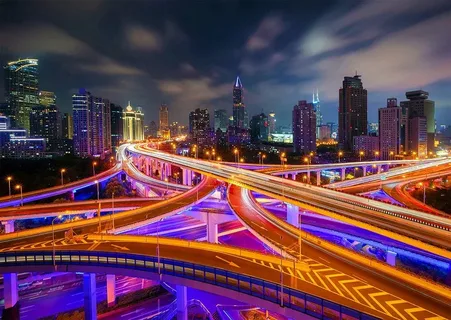
Cities around the world are in the middle of a quiet but powerful revolution, and it is happening one streetlight at a time. Safer city LED lighting is rapidly and decisively replacing outdated high-pressure sodium and fluorescent fixtures across urban landscapes, and not simply for the considerable cost savings it delivers. The shift to LED is happening because of what it fundamentally means for communities: safer streets where people feel confident walking after dark, cleaner environments where carbon emissions from public lighting fall sharply, and smarter cities where lighting infrastructure becomes a live, connected node in a broader urban intelligence network.
This comprehensive guide explores everything worth knowing about urban LED lighting, from the science and engineering behind the technology, to the real-world results that cities from Los Angeles to Copenhagen are already documenting, to the practical frameworks that help municipalities plan and execute successful LED rollouts. For anyone with a stake in how cities grow, adapt, and care for their residents, this is required reading.
What Is Safer City LED Lighting?
Safer city LED lighting refers to the deliberate deployment of Light Emitting Diode (LED) technology across public urban spaces, including streets and roads, residential neighbourhoods, parks and recreational areas, pedestrian walkways, tunnels, underpasses, bridges, car parks, and public squares, with the specific goals of improving visibility, enhancing personal and road safety, reducing energy consumption, and supporting smart city infrastructure.
Unlike traditional high-pressure sodium (HPS) lamps, which cast a dim, yellowish glow that distorts colours and leaves large portions of streets in relative darkness, or metal halide fixtures that take several minutes to warm up and produce inconsistent output, LED streetlights produce a bright, crisp, white light that more closely resembles natural daylight. This fundamental difference in light quality has a profound effect on how safely and comfortably people navigate urban environments at night.
The term “safer city” in the context of LED lighting is not marketing language; it is a measurable outcome. Research from institutions including University College London, the International Association of Chiefs of Police, and numerous municipal transportation authorities has consistently demonstrated that quality street lighting reduces pedestrian accidents, deters opportunistic crime, and increases public confidence in shared spaces. LED technology makes that quality of lighting achievable at scale, at a cost that makes city-wide deployment financially viable for the first time in urban history.
Why Urban Lighting Is One of the Most Important Safety Tools a City Has
Before examining what LED lighting specifically offers, it is worth understanding why urban lighting itself matters so deeply to the safety and well-being of city populations. Street lighting has been a feature of urban life for centuries, but the quality, coverage, and intelligence of that lighting varies enormously from city to city and even street to street within the same neighbourhood.
The relationship between lighting quality and public safety is not simply intuitive; it is empirically well-supported. Cities and researchers have documented several consistent patterns across different geographies and urban contexts.
Road Traffic Safety is perhaps the most directly measurable impact. The UK Department for Transport has found that around 40% of road traffic collisions occur during the hours of darkness. Studies in cities that have upgraded their street lighting to higher-quality systems consistently report reductions in nighttime traffic accidents in the range of 15 to 30%. Improved visibility gives drivers more reaction time, makes pedestrians and cyclists more visible from greater distances, and illuminates road markings, signage, and hazards more effectively.
Crime Deterrence is another well-documented effect of quality urban lighting. The evidence is not absolute; lighting alone does not eliminate crime, but research consistently shows that improved street lighting in urban areas correlates with reductions in property crime, theft, and certain categories of violent crime, particularly in public spaces. The psychological effect is significant: when people can see and be seen clearly, would-be offenders perceive a higher risk of identification.
Community Wellbeing and Cohesion may be the least-discussed but arguably most socially significant benefit of quality urban lighting. When streets and parks feel unsafe after dark, residents withdraw from public life. Local businesses lose evening trade. Elderly residents and women are statistically more likely to report feeling unsafe in poorly lit areas and limit their movement after dark. Safer city LED lighting reverses this dynamic, enabling public spaces to remain active, welcoming, and economically productive throughout the evening hours.
Emergency Response Effectiveness is also enhanced by well-lit urban environments. Police, paramedics, and firefighters operating in well-illuminated streets can navigate faster, assess situations more accurately, and communicate with bystanders more effectively than in poorly lit conditions.
Given all of this, the case for investing in high-quality urban lighting infrastructure is not simply economic; it is fundamentally a matter of public health, justice, and community equity.
The Core Benefits of Safer City LED Lighting
1. Superior Brightness, Uniformity, and Colour Quality
The most immediately noticeable quality of LED street lighting is its brightness but brightness alone does not fully capture what makes LED superior to its predecessors. The more meaningful technical measure is uniformity: how evenly light is distributed across a surface. Traditional street lighting, particularly high-pressure sodium, creates a hot spot of light directly below each fixture with rapidly diminishing illumination between poles. This creates the familiar pattern of pools of light separated by stretches of comparative darkness.
LED lighting, by contrast, can be designed with optics that distribute light much more evenly across the full width of a street or pathway. The result is a surface where the difference between the brightest and darkest points is far smaller, and this uniformity is directly linked to improved safety, since it is often the transitions between light and dark where accidents and criminal incidents occur.
Equally important is colour rendering. The Colour Rendering Index (CRI) is a measure of how accurately a light source renders the colours of objects compared to natural daylight. High-pressure sodium lights have a CRI of approximately 20 to 25 out of 100, so low that colours appear muted and distorted, making it genuinely difficult to distinguish the colour of a car, read facial features, or identify clothing at a distance. Modern LED streetlights achieve CRI values of 70 to 90 or above, which means objects, people, and vehicles appear in something close to their true colours. For surveillance camera systems, this is a transformative improvement in the quality of footage captured under LED lighting, which is dramatically better than under sodium vapour lamps, making it significantly more useful for incident investigation.
2. Dramatic Energy Efficiency and Long-Term Cost Savings
The financial case for safer city LED lighting is one of the clearest in all of public infrastructure investment. LED streetlights consume between 50% and 75% less electricity than the traditional technologies they replace. For a city running tens of thousands of streetlights around the clock, every hour of operation represents a substantial cost. Multiply the per-hour saving across an entire urban network operating 4,000 hours per year or more, and the aggregate energy savings quickly reach tens of millions of kilowatt-hours annually.
In practical terms, cities that have completed large-scale LED rollouts regularly report annual energy savings in the millions of dollars. Los Angeles, which converted over 140,000 streetlights to LED, reported energy savings of approximately $10 million per year. Glasgow, in Scotland, projected annual savings of £2.7 million from its city-wide LED rollout. These are not marginal improvements; they represent genuinely transformational changes to municipal operating budgets.
Beyond energy costs, LED technology dramatically reduces maintenance expenditure. A quality LED streetlight has an operational lifespan of between 50,000 and 100,000 hours. At an average of 12 hours of operation per night, a 100,000-hour LED fixture will last over 22 years before needing replacement. High-pressure sodium lamps, by contrast, typically require replacement every 2 to 4 years. Across a large urban network, the labour costs, equipment costs, traffic management requirements, and disruption associated with lamp replacement programmes represent a very significant ongoing expense. LED technology eliminates most of this maintenance burden.
Capital payback periods for LED street lighting projects, the point at which cumulative savings from energy and maintenance offset the initial installation investment, typically range from 3 to 7 years, depending on local electricity prices, the scale of the project, and the age of the infrastructure being replaced. After the payback period, the continued savings represent a net financial benefit to the municipality year after year.
3. Meaningful Reductions in Carbon Emissions
Safer city LED lighting is one of the most accessible and scalable tools available to city governments committed to reducing their carbon footprint. Street lighting accounts for a substantial share of municipal electricity consumption in many cities; it is the single largest electricity cost in the public infrastructure portfolio. By switching to LED, cities immediately and significantly reduce the electricity demand associated with public lighting, which translates directly into lower CO₂ emissions from electricity generation.
The carbon reduction figures are compelling. Studies and municipal reports consistently document CO₂ reductions of 40 to 60% from LED streetlight conversions compared to the sodium vapour or metal halide systems they replace. When LED streetlights are paired with renewable energy sources, either through grid-level renewable procurement or through direct solar integration, the carbon reduction approaches or reaches 100% for the lighting system itself.
For cities with publicly stated climate commitments, net-zero targets, participation in the C40 Cities network, or commitments under the Paris Agreement framework, safer city LED lighting represents one of the most cost-effective and rapidly deployable levers available to demonstrate and deliver real emissions reductions.
4. Smart City Integration and Intelligent Control
One of the most exciting and strategically significant aspects of modern LED street lighting is that it is not simply a passive source of illumination; it is an intelligent, connected infrastructure. Modern LED streetlights can be integrated with smart city management platforms to deliver capabilities that were simply not possible with analogue lighting technologies.
Adaptive and Demand-Responsive Dimming is among the most practically valuable smart features. Rather than burning at full power throughout the night regardless of whether anyone is present, smart LED systems can monitor pedestrian and vehicle activity through embedded sensors and adjust light output accordingly. A quiet residential street at 3 a.m. might operate at 30% of full power; as a pedestrian approaches, sensors trigger the nearby fixtures to ramp up to full brightness; as the pedestrian passes, the lights behind them gradually dim again. This dynamic management typically delivers an additional 20 to 30% reduction in energy consumption on top of the baseline savings from switching to LED.
Centralised Remote Monitoring and Management allows city operators to oversee an entire lighting network from a single dashboard. Every fixture reports its operating status in real time. Outages are detected and flagged automatically, often before any resident reports the issue. Maintenance teams can be dispatched precisely to where they are needed, eliminating inefficient survey routes and ensuring that no outage persists unaddressed for days or weeks. In cities where maintenance response was previously reactive and slow, this capability is transformative.
Integrated Sensor Networks take LED infrastructure beyond lighting entirely. Modern smart poles, the mounting structures for LED streetlights, can host a wide range of sensor systems, including air quality monitors measuring pollutants in real time, acoustic sensors tracking noise levels, traffic counting and vehicle classification systems, environmental sensors for temperature, humidity, and UV, and 5G small cell antenna equipment for communications infrastructure. The LED streetlight becomes a platform, and the urban data it generates becomes a resource for planners, policymakers, and residents.
Emergency Alerting and Public Safety Communication is another capability increasingly built into smart LED systems. Fixtures can be programmed to flash, change colour, or illuminate at maximum intensity in response to emergency alerts from police or civil authorities, creating a city-wide visual communication channel that can help direct people away from dangerous situations or guide emergency services.
5. Significant Reduction in Light Pollution
Light pollution, the excessive or misdirected artificial light that brightens the night sky, disrupts ecosystems, and affects human health, is a growing concern in urban environments worldwide. Traditional street lighting technologies contribute substantially to light pollution because omnidirectional light sources scatter a significant portion of their output upward and sideways rather than downward, where it is needed.
LED technology, by its nature, is far more directional. LED chips emit light in a hemisphere, and with well-designed optical systems, refractors, reflectors, or lens arrays, the output can be shaped very precisely to illuminate the target surface (the road or pathway below) while minimising upward light spill and sideways glare. Well-designed LED streetlights can dramatically reduce skyglow, the orange dome of scattered light that obscures stars above cities and affects the circadian rhythms of both humans and wildlife in peri-urban areas.
This matters not just aesthetically or environmentally, but practically. Light trespass into residential bedrooms disrupts sleep quality. Bright, glaring fixtures cause visual discomfort for pedestrians. Upward light spill illuminates the undersides of clouds and contributes to the perception that urban areas are always luminously visible from miles around, an effect that has genuine implications for biodiversity, particularly for nocturnal species and migratory birds.
Safer city LED lighting, when implemented with thoughtful photometric design, can address all of these concerns simultaneously, delivering better light where it is needed, while significantly reducing unwanted light everywhere else.
How LED Lighting Transforms Specific Urban Environments
Streets and Major Roads
On busy arterial roads and highways, the priorities of safer city LED lighting are clear: maximum visibility for all road users, elimination of the dangerous dark patches that occur between traditional streetlight poles, and glare control that prevents oncoming drivers from being dazzled. LED systems designed for road lighting achieve all three objectives while consuming a fraction of the energy of their predecessors.
The higher colour rendering of LEDs is particularly valuable on roads shared by vehicles, cyclists, and pedestrians. A cyclist in dark clothing is far more visible under LED illumination than under sodium vapour, and a pedestrian stepping off a kerb is more easily detected by a driver approaching at speed. These improvements in detection distance and reaction time have measurable safety consequences.
Residential Neighbourhoods
In residential streets, the lighting design challenge is more nuanced. Residents living adjacent to streetlights have legitimate concerns about light trespass into their homes, particularly bedroom windows. At the same time, the demand for adequate security lighting on residential streets is well-established. LED technology navigates this tension more effectively than any previous technology, because precise optics can direct light downward onto footways and roads while sharp cut-off designs minimise horizontal and upward spill.
Smart dimming profiles are particularly useful in residential areas. Full output during the evening hours when foot traffic is highest gives way to a reduced level in the early morning hours, saving energy without compromising safety. Many cities implement a 100%-to-50% dimming profile after midnight or 1 a.m., striking an effective balance.
Pedestrian Walkways and Urban Parks
Parks and pedestrian pathways present some of the most challenging lighting scenarios in urban environments. They are often the spaces where residents feel most vulnerable after dark, and yet they are also spaces where excessive or harsh lighting would feel intrusive and unnatural. Getting the balance right is essential to achieving the goal of encouraging communities to use and enjoy these spaces at all hours.
Safer city LED lighting designed for parks and pathways typically uses warmer colour temperatures (3000K to 4000K) to create an inviting atmosphere, combined with careful pole heights and spacing to ensure consistent coverage without hot spots. Decorative LED luminaires designed to complement the aesthetic of public spaces rather than feel industrial are increasingly available and widely deployed.
When these spaces are well-lit with quality LED systems, the results in terms of community use are often dramatic. Evening activity increases. Dog walkers, joggers, and families use paths they previously avoided. Local businesses adjacent to parks report increased evening trade. The investment in LED lighting creates visible, measurable improvements in urban quality of life.
Tunnels and Underpasses
Tunnels represent a unique and technically demanding lighting challenge. The human eye adapts to ambient light levels, which means that drivers entering a brightly sunlit tunnel entrance experience a sudden transition to darkness that temporarily reduces their vision to near zero, a phenomenon known as the “black hole effect.” Inside tunnels, the lack of natural reference points makes maintaining safe speeds and lane discipline more difficult, and the enclosed environment amplifies the consequences of any accident.
LED lighting designed for tunnels addresses these challenges directly. Adaptive lighting zones at tunnel entrances gradually reduce in intensity from very high levels at the mouth (designed to match the daylight outside) to moderate levels in the interior, giving drivers’ eyes time to adjust safely. Emergency lighting systems, integrated with fire detection and traffic management, ensure that illumination levels are immediately appropriate for any incident scenario. The long lifespan of LED systems is particularly valued in tunnel environments, where lamp replacement is expensive, disruptive, and requires complex traffic management.
Car Parks and Parking Structures
Multi-storey car parks and surface parking facilities are consistently cited in public safety surveys as environments where people feel vulnerable, particularly at night. The lighting quality in many older parking structures is poor by any measure: flickering fluorescent tubes, inconsistent coverage, and pools of deep shadow create an environment that is simultaneously visually uncomfortable and genuinely less safe.
High-output LED lighting, combined with occupancy-sensing smart controls, transforms the car park environment. Full, even illumination across all areas eliminates shadows and dark corners. When areas are unoccupied, smart controls dim the lights to a low standby level, saving significant energy in facilities that might otherwise run at full power for 24 hours regardless of usage. Motion triggers restore full illumination instantly when anyone enters. Security cameras, which are typically essential in parking facilities, operate far more effectively under LED illumination, and the quality and resolution of footage improve dramatically.
The Technology Behind Safer City LED Lighting
The Science of Light Emitting Diodes
Understanding why LED technology is superior in so many respects begins with understanding how it produces light. Traditional incandescent bulbs pass electrical current through a thin metal filament, which heats to incandescence, glowing visibly because of its temperature. The process is highly inefficient, producing enormous amounts of heat relative to light. Fluorescent tubes energise gas molecules that emit ultraviolet radiation, which is then converted to visible light by a phosphor coating on the tube. Both processes have significant inefficiencies.
LEDs, Light Emitting Diodes, operate on an entirely different principle: electroluminescence. When electrical current passes through a semiconductor material (typically based on gallium nitride), electrons move across the semiconductor junction in a way that directly releases energy as photons of visible light. There is no filament to heat to incandescence, no gas to energise, and very little energy wasted as heat. The efficiency of this process is inherently much higher than either of the traditional technologies it is replacing. Modern LED chips convert approximately 40 to 60% of electrical energy directly into light, compared to less than 5% for incandescent bulbs and around 20 to 25% for traditional fluorescent technology.
Colour Temperature: Choosing the Right Light for the Right Space
Colour temperature, measured in Kelvin (K), describes the perceived warmth or coolness of a light source. Lower Kelvin values produce warmer, more amber or reddish tones; higher values produce cooler, bluer tones that approach and eventually exceed daylight. For urban lighting applications, colour temperature is both a safety and a well-being consideration.
In residential streets and neighbourhood parks, warmer colour temperatures in the range of 2700K to 3000K are generally preferred. They create a comfortable, inviting atmosphere that feels less institutional than cooler options and reduces the blue-light exposure associated with sleep disruption. For main roads, commercial areas, and high-visibility applications, neutral to cool white temperatures in the range of 4000K to 5000K deliver the best contrast and colour rendering. For tunnels, car parks, and high-security areas, 5000K to 6000K daylight-equivalent temperatures maximise visibility and camera performance.
The growing awareness of blue light’s effects on human melatonin production and circadian rhythms has prompted some municipalities to adopt a dual-mode approach, with warmer operation in the evening hours, transitioning to cooler output in the early morning hours when safety demands are higher, but fewer residents are being disturbed.
LED Drivers, Controls, and Connectivity
Every LED streetlight fixture requires an LED driver, the electronic power supply unit that converts incoming mains electricity into the precise, regulated direct current that LED chips require to operate correctly. The quality of the driver is arguably as important as the quality of the LED chip itself, because a poor-quality driver can reduce efficiency, cause flickering, shorten LED lifespan, and create radio-frequency interference.
Modern LED drivers for smart city applications support multiple control protocols. The DALI (Digital Addressable Lighting Interface) protocol is the international standard for digital lighting control, allowing individual or group dimming, real-time status reporting, and scene management. Wireless protocols, including Zigbee, LoRa, and cellular (4G/5G), allow LED streetlights to communicate with central management platforms without physical control wiring, significantly reducing installation complexity and cost, particularly for retrofit projects where trenching for new cabling would be impractical.
LED Lighting vs. Traditional Street Lighting: A Side-by-Side Comparison
| Feature | LED Lighting | High-Pressure Sodium | Metal Halide |
|---|---|---|---|
| Energy Consumption | Very Low (50–75% savings) | High | High |
| Lifespan (hours) | 50,000 – 100,000 | 10,000 – 24,000 | 6,000 – 15,000 |
| Colour Rendering Index | 70 – 90+ | 20 – 25 | 60 – 70 |
| Warm-Up Time | Instant | 3–5 minutes | 2–5 minutes |
| Re-Strike Time After Outage | Instant | Up to 5 minutes | Up to 5 minutes |
| Smart Control Compatible | Yes | Very Limited | Very Limited |
| Mercury Content | None | None | Yes |
| CO₂ Emissions | Very Low | High | High |
| Maintenance Frequency | Low | High | High |
| Light Pollution | Low (directional) | High (omnidirectional) | Medium |
| Performance in Cold Climates | Excellent | Reduced | Reduced |
The data present a picture that is difficult to argue with. On virtually every metric that matters to city planners, safety officers, sustainability managers, and finance directors, safer city LED lighting outperforms its traditional counterparts decisively.
Real-World Case Studies: Cities That Are Leading the Way
Los Angeles, California, USA
Los Angeles stands as one of the most documented and frequently cited examples of large-scale safer city LED lighting implementation. Beginning in the early 2010s, the city undertook one of the largest LED streetlight conversion projects in history, ultimately replacing over 140,000 streetlights with LED technology. The energy savings were immediate and substantial, approximately 63% reduction in streetlight energy consumption, translating to approximately $10 million in annual savings. Beyond the financial outcomes, areas that received upgraded LED lighting reported measurable improvements in community safety perceptions and, in several districts, statistically significant reductions in specific categories of street crime in the years following conversion.
Copenhagen, Denmark
Copenhagen, already widely recognised as one of the world’s most liveable and sustainable cities, implemented a comprehensive intelligent LED street lighting network that goes beyond simple lamp replacement. The city’s system includes adaptive dimming that responds to real-time traffic and pedestrian data, centralised monitoring of every fixture, and integration with Copenhagen’s broader smart city management infrastructure. Energy reductions of approximately 57% were documented, while residents consistently rated the new lighting as an improvement over the sodium vapour system it replaced, both in terms of light quality and their sense of safety when moving through the city at night.
Jakarta, Indonesia
Jakarta’s LED street lighting programme forms part of the city’s broader urban safety and smart infrastructure initiative. Implementation of LED streetlights across key urban corridors was followed by documented reductions in nighttime traffic incidents in the converted areas within the first year of operation. City authorities attributed the improvements primarily to enhanced road surface visibility and improved pedestrian detection distances for drivers. The programme has since been expanded, with the Indonesian government incorporating safer city LED lighting into its national smart city framework.
Ahmedabad, India
As a flagship participant in India’s national Smart Cities Mission, Ahmedabad deployed LED streetlights across the city on a significant scale, integrating the new fixtures with a centralised command and control system that allows real-time monitoring and management of the lighting network. Reported energy consumption reductions exceeded 50%, and the centralised fault detection system dramatically reduced the average time between an outage occurring and maintenance personnel being dispatched to rectify it. The Ahmedabad experience has served as a model for other Indian cities pursuing LED lighting upgrades.
Glasgow, Scotland
Glasgow’s LED streetlight conversion programme, rolled out progressively across the city’s approximately 69,000 streetlights, delivered projected annual savings of £2.7 million while simultaneously improving light quality on streets that had been lit by ageing sodium vapour technology for decades. The city integrated its LED network with Glasgow’s CityOS smart city platform, enabling centralised monitoring and adaptive management of the lighting estate. Glasgow’s programme is frequently cited as a model for other UK cities pursuing both sustainability and safety objectives through public lighting upgrades.
The Environmental Impact of Safer City LED Lighting
Carbon Reduction at Scale
The environmental case for safer city LED lighting is compelling not just in isolation, but in the context of urban climate commitments. Street lighting is responsible for a significant proportion of municipal electricity demand in many cities; it is the largest single electricity-consuming item in the public infrastructure budget. By cutting that consumption by 50 to 75%, LED conversion delivers carbon reductions that are immediately real, measurable, and verifiable.
When this reduction in electricity demand is paired with grid decarbonisation as renewable energy increasingly displaces fossil fuel generation, the carbon benefit compounds. A city that switches to LED today and sits on an electricity grid that becomes 80% renewable over the next decade will see its LED streetlights’ carbon intensity fall progressively without any further infrastructure change.
Elimination of Hazardous Materials
Mercury is a toxic heavy metal found in fluorescent lamps and certain high-intensity discharge (HID) lamps. When these lamps reach the end of their life, the mercury they contain represents an environmental hazard that requires careful handling and specialised disposal. Across a large urban lighting network, replacing lamps every 2 to 4 years, the cumulative quantity of mercury requiring disposal is substantial.
LED lights contain no mercury. Their end-of-life management is significantly simpler, and the environmental risk associated with breakage during handling or transportation is effectively zero. This simplification of the disposal process has both environmental and logistical benefits for cities transitioning away from mercury-containing technologies.
Reducing the Urban Heat Island Effect
Cities tend to be measurably warmer than the rural areas surrounding them, a phenomenon known as the Urban Heat Island (UHI) effect, driven by dark road surfaces absorbing solar energy, reduced vegetation, and waste heat from buildings, vehicles, and infrastructure. Conventional street lighting technologies, which are thermally inefficient and release significant amounts of energy as heat, are minor contributors to this effect.
LED streetlights, converting electricity to light far more efficiently, release significantly less heat into the urban environment. While the contribution of streetlights to the UHI effect is modest compared to vehicles and buildings, in the context of cities striving to achieve measurable improvements across every dimension of their environmental performance, the heat reduction benefit of LED lighting is a genuine and welcome co-benefit.
Challenges and Considerations in LED Lighting Implementation
The Upfront Capital Investment Challenge
The single most commonly cited barrier to LED streetlight adoption is the upfront capital cost. High-quality LED fixtures, smart control systems, installation labour, project management, and commissioning represent a significant total investment, particularly for large urban networks. While the long-term savings are well-documented and the payback period is typically favourable, many municipalities face real constraints on capital budgets that make the initial outlay challenging to finance through conventional means.
A growing range of financing models has emerged to address this challenge. Energy Performance Contracting (EPC) arrangements allow cities to work with private sector partners who fund the installation and recover their investment from a share of the energy savings, meaning the city begins receiving a net financial benefit from day one without any capital outlay. Green bond financing, where the favourable environmental credentials of LED projects support access to lower-cost debt, is another increasingly common mechanism. Leasing arrangements, where the city pays an annual fee for the LED infrastructure rather than purchasing it outright, are also available through multiple suppliers.
Managing Light Trespass and Glare
While LED technology is inherently more directional than its predecessors, a poorly designed LED fixture can still produce uncomfortable and intrusive glare, or direct unwanted light into adjacent residential properties. Light trespass where streetlight illumination enters private spaces, particularly bedroom windows, is one of the most common complaints associated with LED streetlight installations, and it is an issue that can and should be addressed at the design stage rather than retrospectively.
The solution lies in selecting fixtures with appropriate optics, full cut-off designs that prevent upward light spill, and carefully shaped beam patterns that target light onto the road surface without excessive sideways scatter. Shielding attachments can also be used to direct light away from sensitive adjacent properties. Cities that invest in proper photometric design before installation avoid the community relations problems that can arise when residents are disturbed by new lighting.
Thermal Management for Longevity
LED components are sensitive to temperature. While LEDs produce less heat than traditional lamps, the heat they do generate accumulates within the fixture, particularly within the LED chip and driver electronics. If this heat is not managed effectively and dissipated away from sensitive components through well-designed heat sinks and thermal pathways, the LED chip will experience accelerated degradation, losing output more quickly and failing earlier than its rated lifespan.
Quality LED streetlight fixtures designed for outdoor installation incorporate carefully engineered thermal management systems, including aluminium heat sink housings that conduct heat away from the LED and driver, and convection-based cooling designs that work without moving parts or fans (which would require their own maintenance). Specifying LED fixtures from reputable manufacturers with documented thermal performance data is essential to ensuring that the lifespan benefits of LED technology are actually realised in service.
Procurement Quality and Standards
The LED streetlight market includes products across an extraordinarily wide range of quality levels, from premium fixtures backed by comprehensive warranties and independently verified performance data, to low-cost imports that may fail within 2 to 3 years or perform significantly below their stated specifications. For city procurement teams, navigating this landscape requires care.
Key quality assurance frameworks include DLC (DesignLights Consortium) qualification, which requires independent testing and verification of performance claims; IES (Illuminating Engineering Society) LM-79 and LM-80 testing standards, which verify lumen output and lumen depreciation rates; IP65 or higher weatherproofing ratings, ensuring resilience against rain ingress and dust; and IK ratings (typically IK08 or IK10) for impact resistance against vandalism. Warranties of 5 to 10 years from reputable manufacturers provide an important financial backstop and signal confidence in product longevity.
A Practical Framework for Planning a City-Wide LED Lighting Project
Planning a successful LED street lighting rollout is a complex, multi-stakeholder undertaking that requires careful preparation, clear objectives, and a structured approach. The following framework reflects best practice drawn from successful implementations across multiple countries.
Step 1: Conduct a Comprehensive Lighting Audit
Every successful LED project begins with a thorough understanding of the existing infrastructure. A lighting audit involves cataloguing every fixture in the network, its location, pole type and height, mounting arrangement, lamp type, wattage, age and condition, control gear type, and current energy consumption. This data forms the baseline against which projected savings can be calculated, and it identifies where immediate replacements are most needed due to poor performance or imminent equipment failure.
Modern auditing can be supported by mobile survey technology, where field teams capture data through smartphone apps that geotag each fixture and populate a central asset management database. In some cities, drone surveys have been used to audit large networks rapidly.
Step 2: Define Clear and Measurable Objectives
Before specifying any products or engaging any contractors, city leadership should establish what success looks like. Objectives might include a specific percentage reduction in streetlight energy consumption, a target carbon reduction figure, improved uniformity metrics on key roads, integration with a smart city management platform by a defined date, or a payback period threshold for the total investment. Clear objectives allow the project to be evaluated objectively post-completion and enable meaningful comparison of different implementation approaches during the procurement process.
Step 3: Engage the Community Meaningfully
Community engagement is not just a procedural obligation; it is a source of genuinely valuable intelligence about where lighting improvements will have the greatest impact. Residents know which parks feel unsafe, which pedestrian routes are intimidatingly dark, which intersections are confusing for drivers at night, and which existing fixtures are already causing complaints about glare or light trespass.
Effective engagement might include public consultations, online mapping tools where residents can flag specific lighting concerns, engagement with local business associations about commercial street lighting needs, and communication with disability and older persons’ groups about the specific visibility challenges they face. The result is a community that feels ownership of the project and a project team with a clearer picture of local priorities.
Step 4: Develop a Photometric Design for Key Locations
LED street lighting should not simply replicate the pole spacing and mounting heights of the existing system. LED’s superior efficiency and directional characteristics mean that it is often possible to achieve better lighting outcomes with fewer poles, different spacing, or lower mounting heights, all of which can reduce installation costs. A qualified lighting designer using photometric modelling software can model different fixture types, pole heights, and spacings to identify the most efficient configuration for each road category and environment type.
This step is particularly important for any locations with specific safety concerns, such as major intersections, schools, hospitals, pedestrian crossings, and areas with a documented history of incidents, where the design should be verified rigorously against relevant lighting standards.
Step 5: Run a Pilot Programme
Before committing to a city-wide rollout, it is valuable to install a representative pilot, typically several hundred to a few thousand fixtures across a range of road types and environments and evaluate the real-world performance against the photometric predictions and the stated project objectives. A pilot also allows the supply chain to be tested, installation methodologies to be refined, and community feedback to be gathered before the full programme is committed.
Step 6: Future-Proof the Infrastructure
Even if a city is not yet ready to deploy full smart city capabilities across its LED network, it is strongly advisable to specify fixtures and control gear that are ready for future upgrading. Specifying LED drivers with DALI or wireless control interfaces, mounting provisions for sensors on smart poles, and conduit capacity for future cabling represents a small incremental cost at installation time but avoids the much more expensive process of retrofitting these capabilities later.
Step 7: Monitor, Evaluate, and Report
Post-installation monitoring is essential to capturing the full value of the LED investment. Energy consumption data from smart meters and management platform reporting should be compared regularly against baseline figures. Maintenance call-out rates, response times, and fault resolution statistics should be tracked to verify the maintenance cost savings that were projected. Where possible, road safety statistics and community safety perception surveys should be used to evaluate the safety outcomes of the project. Regular public reporting of these outcomes builds confidence in the investment and supports the case for future phases.
The Future of Safer City LED Lighting
The current state of LED street lighting technology, while already dramatically superior to what it replaced, represents only the beginning of what is possible. Several significant technological trends are shaping the next decade of urban lighting.
Human Centric and Circadian-Aware Lighting
The emerging field of human-centric lighting (HCL) applies the science of chronobiology, the study of biological rhythms, to artificial light design. The colour temperature and intensity of light affect the production of melatonin and other hormones that regulate sleep, alertness, and mood. Urban lighting that applies these principles would automatically shift to warmer, lower-intensity output in the evening hours to avoid melatonin suppression, transitioning to cooler, brighter output in the early morning to support alertness for early commuters. Cities that implement human-centric LED lighting strategies are investing not just in visible safety, but in the biological well-being of their populations.
Solar-Powered LED Streetlights
Solar-integrated LED streetlights where photovoltaic panels mounted on the pole capture solar energy during daylight hours and store it in batteries for use during the night are already commercially available and increasingly cost-competitive in appropriate climates. As solar panel efficiency improves and battery storage costs continue to fall, off-grid LED streetlights will become viable across a much wider range of geographies and climate conditions. For remote areas, developing countries, and locations where grid extension would be prohibitively expensive, solar LED lighting offers a direct path to safer city LED lighting without reliance on mains electricity infrastructure.
Artificial Intelligence in Urban Lighting Management
AI and machine learning are beginning to find applications in urban lighting management that go well beyond simple scheduled dimming. AI systems can analyse traffic data, weather forecasts, historical incident patterns, and real-time sensor inputs to dynamically optimise lighting levels and configurations across entire city networks. Over time, such systems learn the patterns and rhythms of a city, identifying recurring events, seasonal variations, and emerging trends and adjust lighting management strategies accordingly. The result is a lighting network that continually improves its balance of safety, community comfort, and energy efficiency without requiring manual programming.
Vehicle-to-Infrastructure Communication
As autonomous and connected vehicles become an increasingly significant part of urban transportation, the role of street infrastructure, including lighting in vehicle navigation and safety, will evolve. LED streetlights equipped with Vehicle-to-Infrastructure (V2I) communication capabilities can transmit real-time information about road conditions, hazards, and traffic management to connected vehicles. They can also receive signals from vehicles warning of an approaching emergency vehicle, for example and respond by adjusting lighting ahead of the vehicle to maximise safety. This integration positions safer city LED lighting as a foundational element of the connected and autonomous vehicle ecosystem.
Conclusion
Safer city LED lighting represents one of the most impactful, cost-effective, and scalable investments that any city can make in the safety, sustainability, and quality of life of its residents. The technology delivers across every dimension that city governments and their communities care about: brighter, more uniform streets that reduce accidents and deter crime; dramatic reductions in energy consumption that lower costs and carbon emissions; smart integration capabilities that turn streetlights into nodes of an intelligent urban network; and environmental benefits that extend from reduced light pollution to the elimination of hazardous materials from the waste stream.
The evidence from cities that have already made the transition is compelling and consistent. From Los Angeles to Copenhagen, from Glasgow to Ahmedabad, the pattern is the same: streets get safer, budgets improve, communities feel better about their public spaces, and cities make measurable progress toward their environmental commitments. The technology exists, the financing models are available, and the outcomes are proven.
For city leaders, urban planners, sustainability officers, and engaged residents, the conclusion is clear: safer city LED lighting is not simply a sensible infrastructure upgrade. It is a foundational investment in the kind of city that communities deserve, and the evidence strongly suggests that those who invest in it do not regret it.